
Avoiding the "Exquisite Corpse"
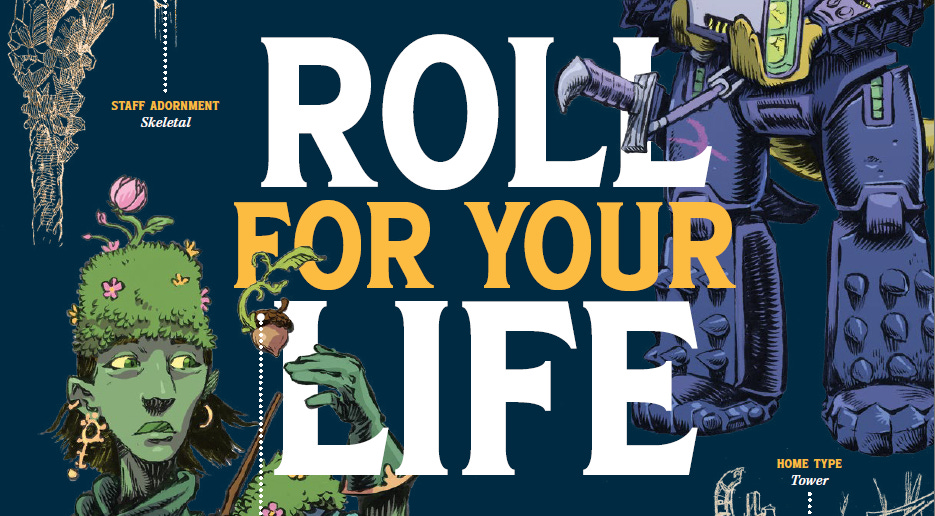
Roll For Your Life balances prescriptive details and suggestive prompts to ensure every random roll feels like a coherent character.
Links:
Get Roll For Your Life here: www.rollforyourlifebook.com
20% discount code: DAVEROLLS26
My YouTube video covering the book.
Dear readers, Dave here. This is my interview with the creators of Roll For Your Life. The creators are Dakota Sandoval, Henry Nolan, Daniel McCurdy and Conor Nolan. Dakota, Henry and Conor all chime in and answer my questions. I’ll add their names at the beginning of each answer that belongs to them. Enjoy!

You mention the “teenage novelty” of rolling for dragons in the 90s. What was the specific spark in 2020 that made you realize this childhood game could, and should, become a publishing endeavor?
HENRY: Dakota, Daniel, and I had put a decent chunk of time into developing prototype tabletop games together. They ranged from super-simple ripoffs of Apples to Apples to complex, multi-component kerfuffles for which we had to invent multiple acronyms. We’d work on RFYL style chapters, without having a name for them, basically as a break from the ‘real work’. That was always the most fun for us. At some point we realized we could focus our time on RFYL, with its systemic simplicity and limitless potential for content, and bank on the hope that other people would have as much fun with it as we did!
You’ve been telling stories together for two decades. What were some of your biggest influences for Roll For Your Life?
HENRY: I personally have played a ton of tabletop RPGs over the last decade, mostly with a separate group of folks excluding Dakota and Daniel. I’ve been very pleasantly surprised with the output of random tables in TTRPGs, particularly ones with detailed entries, and I’ve always loved trying to make a seemingly nonsensical result fit into the context and tone of a given story. Dakota and I are both insufferable cinephiles, he probably a bit more than me, and we’ve spent hours making up imaginary movies that sound real with casts, release dates, reviews, etc. Daniel and I go on long walks and make up retro video games, TV series, and YA novels. We have always loved whipping up outlines for stories and media that sound like they could already exist, but don’t. RFYL just codifies that activity, with a ‘code’ simple enough that anybody can pick it up and play.
When expanding from simple lists of traits to the evocative descriptions found in the final book, how do you balance giving enough detail to inspire while leaving enough “white space” for the player’s own imagination?
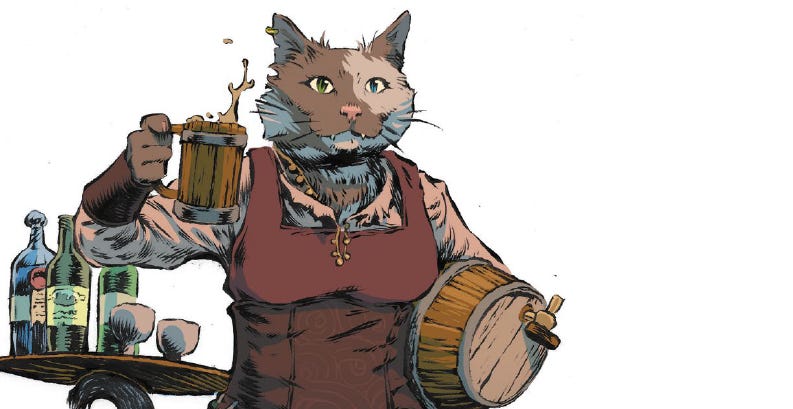
HENRY: That’s a tough one! Earlier iterations of descriptive text had lots of conditional language like ‘you may’, ‘perhaps’, and ‘something along the lines of...’ We ultimately tried to remove most of that and trust readers to take specific details as sparks of inspiration rather than barriers to the scope of a character. We made ourselves laugh by making up proper nouns like Orgo the Vengeful and inserting detailed story vignettes into the text, and gradually gravitated toward language that was specific and evocative rather than broad and all-encompassing, simply because it felt right.
Launching a debut physical hardcover via Kickstarter is a major undertaking. What was the most surprising lesson learned about the “business of fun” during your campaign?
DAKOTA: The Kickstarter was an exciting and terrifying experience. The highs of all the launch day pledges and the depths of despair when the dopamine and backer traffic slow to a crawl at the mid-point of the campaign. This was our first major project and our first crowdfunding venture. The lessons I learned were countless and there’s a lot I would do differently, from pre-launch advertising and community outreach to budget planning, shipping costs, and realizing everything takes three times as long as you think. Just when I felt I had truly digested a lesson and started to apply the knowledge gained, it was time to move on to the next phase. That’s just the nature of these campaigns: if you’re lucky enough to reach your goal, the journey to print is long and there’s no looking back. I suppose we’ll have to do another so I can utilize what I learned the first time around!
Was there a temptation at any point to write more for each entry, or expand the number of tables or chapters for the book?
HENRY: Definitely. The earliest version of RFYL was skeletal, with a single word or phrase for each category and outcome, no complete sentences. We realized quickly that ya can’t make a book like that. At first filling in the descriptive text for each entry occasionally felt like pulling teeth, until we realized it was just a chance to imitate the tone and the voice, to use the vocabulary of the well-defined genre stories we love so much. Then when it came time to fit each chapter to the layout, we had to pull back a bit from the longer meandering descriptions to get everything to fit. Luckily we’re not aiming to write a coherent linear narrative (mad respect to those who write real books), just discrete scraps of juicy language, so trimming a given sentence to fit its space doesn’t require a rework of all the other text around it.
II.
You included a “Do-Over” mechanic that forces players to lock in a result before moving forward, creating a bit of gamification in the creation process. Was this always part of the game, or did it emerge as a way to curb the urge to just pick the best result?
HENRY: We actually had do-overs since the earliest versions. I’m not sure whose idea it was but I think even at that point I had some familiarity with free or rules-lite tabletop RPGs that usually had some kind of token to spend to reroll a die. It’s a simple little mechanic to ratchet on to any dice system.
Some table entries provide absolute results, while others are incredibly open-ended. How do you decide which elements of a character or location should be prescriptive and which should be purely suggestive?
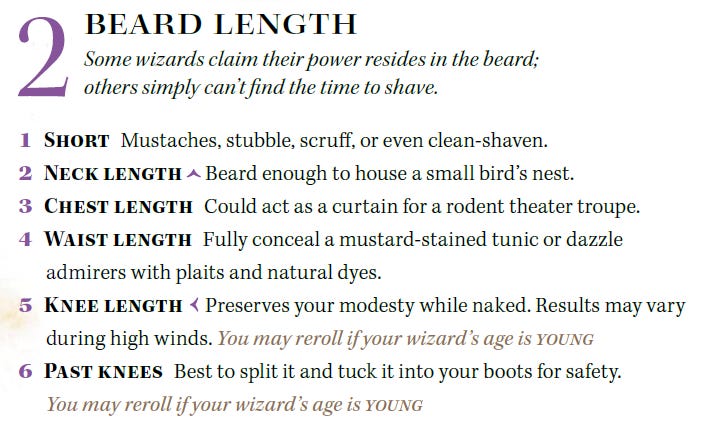
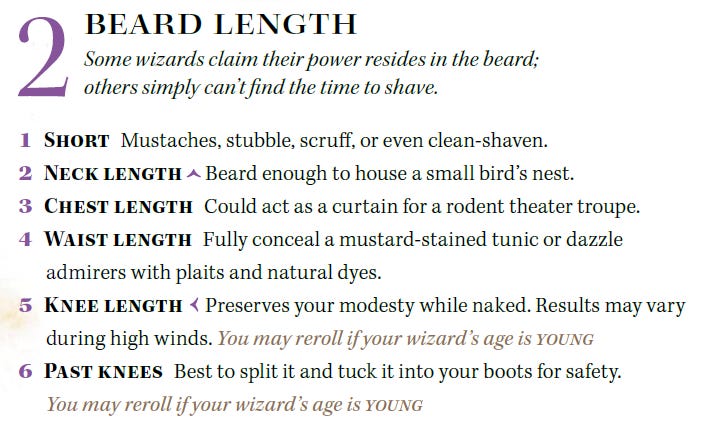
HENRY: We made sure to provide at least a few concrete details for each chapter. ‘Your wizard’s beard is... chest length.’ It’s easier to be concrete and clear with outcomes that relate to a character’s physical appearance or equipment: hats, tools, weapons, the color of a dragon’s scales, etc. But too many categories like that can lead to an ‘Exquisite Corpse’ scenario where the final set of outcomes feels deliberately disjointed. We aim for some breadth of possibility in categories like your quest, your flaw or hindrance, sort of character beats or story hooks or internal traits rather than the tangible parts of a ‘loadout.’ But it’s ultimately subjective, and we like to take time to tinker with the specificity of categories and outcomes, and we don’t always agree unanimously on the final result.
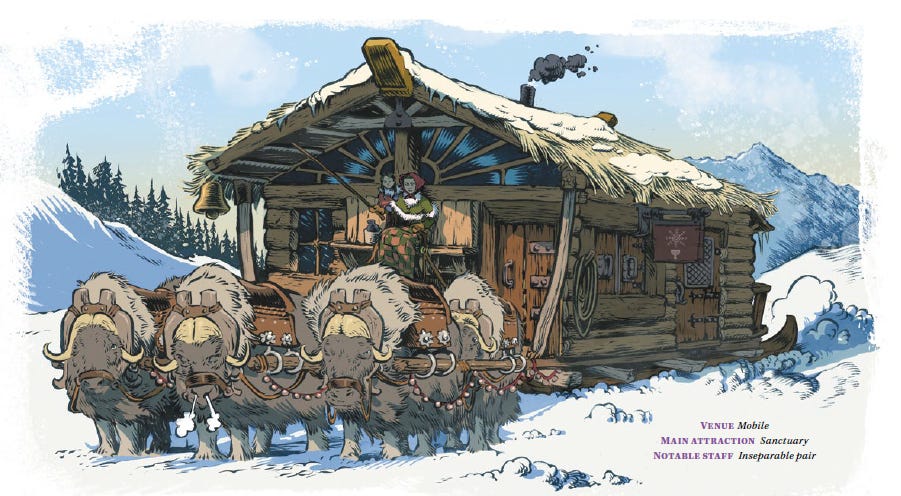
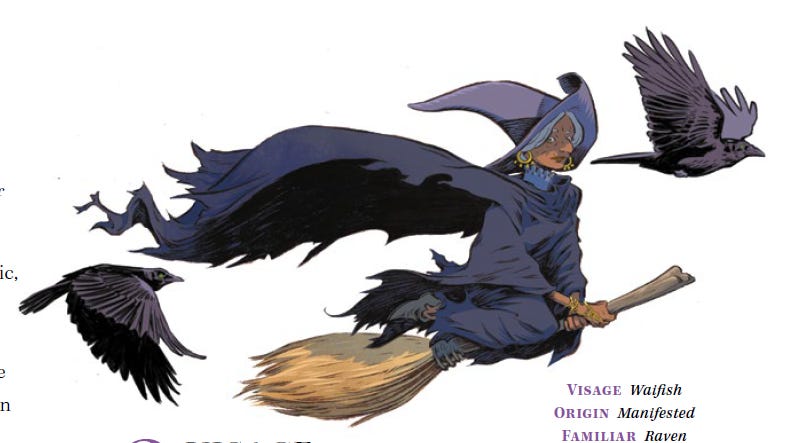
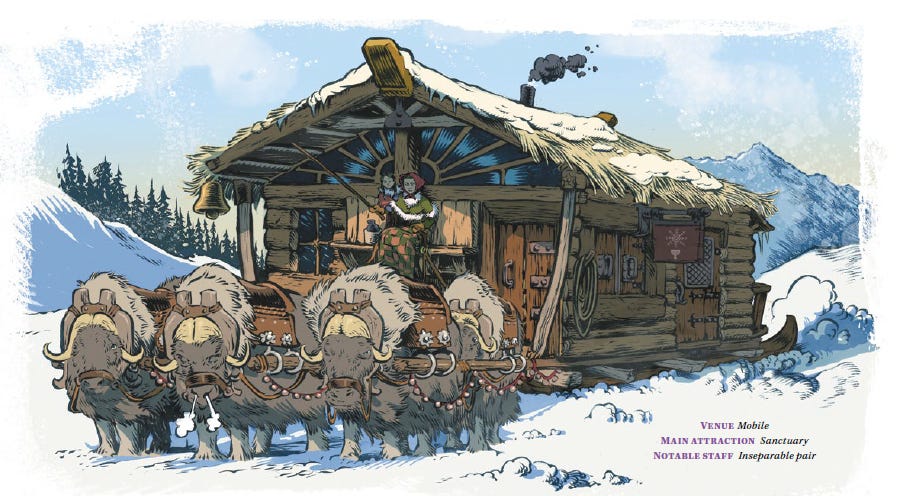
With 144 million possible Wizards and 362 million Dragons, the scale is staggering. How did you ensure that even the weirdest results would still feel coherent?
HENRY: That’s a wonderful question. There’s no reasonable way to ‘playtest’ that many permutations. The one thing we’ve tried to do is make sure that no category outcomes directly contradict any other category outcomes in a given chapter. Beyond that, I just want to see more of what people do with a ‘totally out there’ set of outcomes, the weirder the better! In my experience that’s the richest space for actually surprising yourself with a connection or a story that feels totally new.
You included “Alternate Rules” like Loan Sharks and Collective Play. Which of these variants is your personal favorite?
HENRY: I like Loan Sharks. It’s a little bit of a ‘gotcha’ mechanic for players rolling together, and the whole activity is so breezy and lighthearted that I don’t think it feels bad. Any small interactive mechanic between players helps RFYL feel more like a standalone game, which is how I like to treat it.
The book is described as both a “celebration and sendup” of cliches. Was there a specific genre trope that you found particularly difficult to “rip out the shiniest pieces” of without it feeling too tired?
HENRY: Both the Pirate and Wild Westerner chapters are rooted in real historical contexts of people being awful to other people. We wanted to acknowledge the cruelty of colonialism in all its forms, and to talk a little bit about ethnicity and nationality and gender in those times, in a way that might spawn new stories from that rich but problematic ground. Our Wild Westerner chapter is much more 21st century Revisionist Western than 1950s John Wayne flick. We haven’t set out to say anything definitive about the real world or real history, but it felt wrong to completely gloss over the xenophobia, exploitation, and genocide that defined the times and places that inspired some of these seasoned genres. We aimed for a subversive and anti-authoritarian tonal undercurrent throughout the book, hoping to nudge character creators toward stories of triumph over oppressive systems. Basically we try to say: “Remember all these cool tropes and set pieces and characters from old Westerns? Can we pull out a new story that uses all that, but treats all the humans as humans and unequivocally recognizes Manifest Destiny as evil?” It’s not tiresome so much as time-consuming to be thoughtful and choosy with the language we use, and I think it’s well worth it.
III.
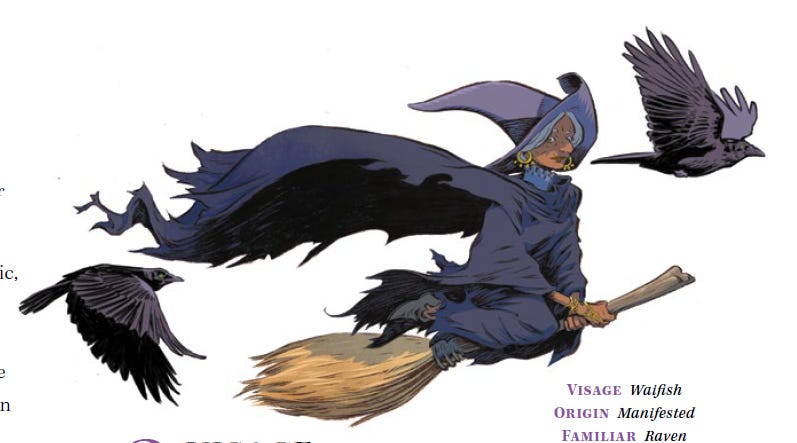
Artist Conor Nolan has worked with clients ranging from Dark Horse Comics to Phish. How did illustrating for an RPG supplement differ those other jobs?
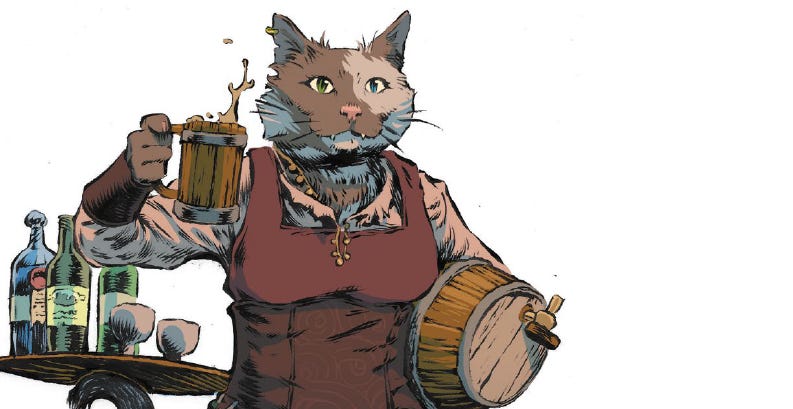
CONOR: The most major difference would be that there is no narrative throughline that exists amongst all the illustrations. In comics, you usually show the same characters in a few different settings. With RFYL, variety is key, therefore you end up needing to ‘explore the space’ more. It’s fun because you get to really delve into a genre, and dig deep in order to not show the same thing twice.
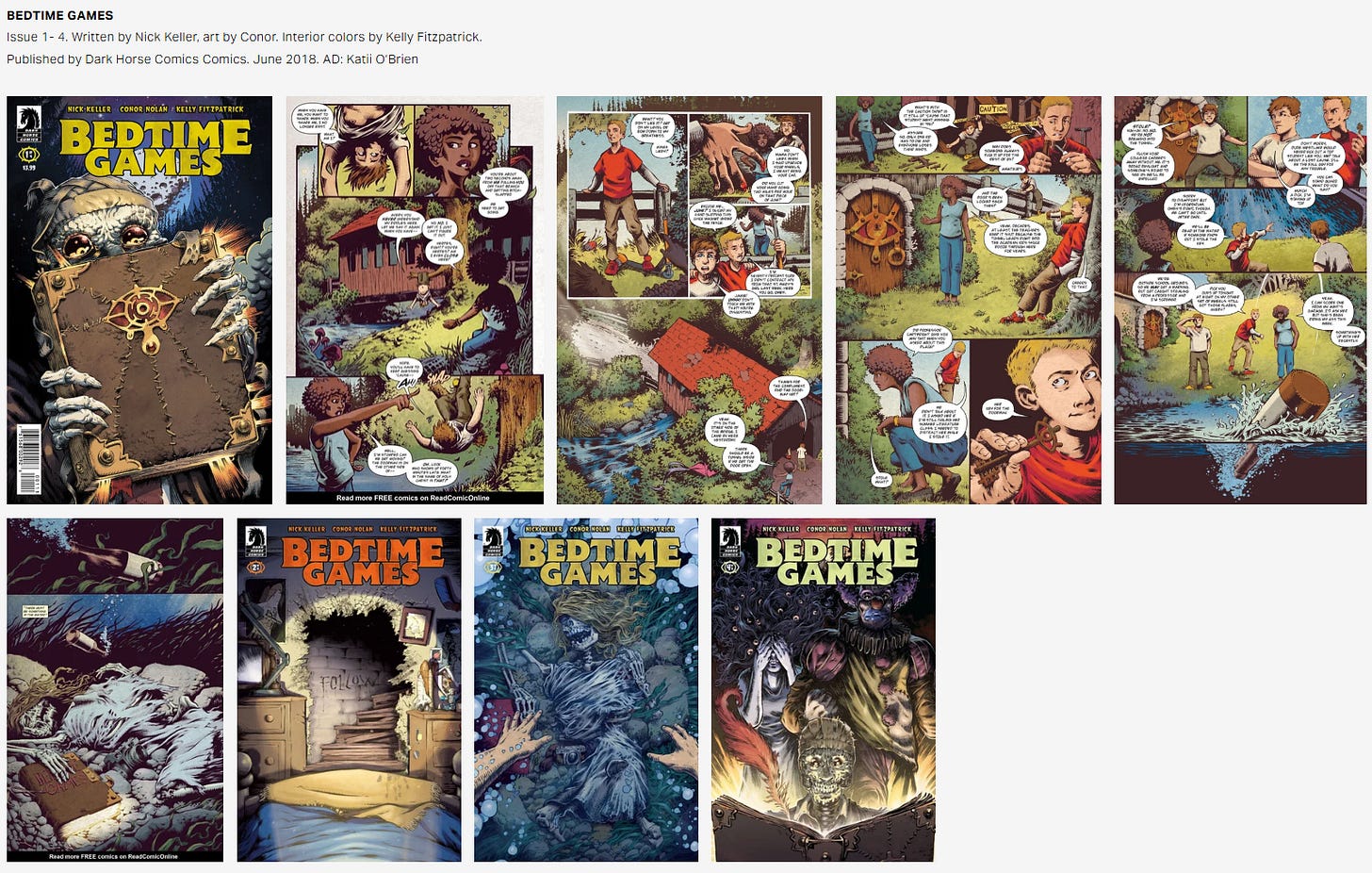
From conornolan.com The “Showcase” pages provide a bridge between the raw data of the tables and a finished narrative. What was the process for translating those specific random results into the vignettes?
CONOR: The writers made this transition quite easy, plus the tables were made in such a way that the results usually made lots of sense when translated to a visual medium.
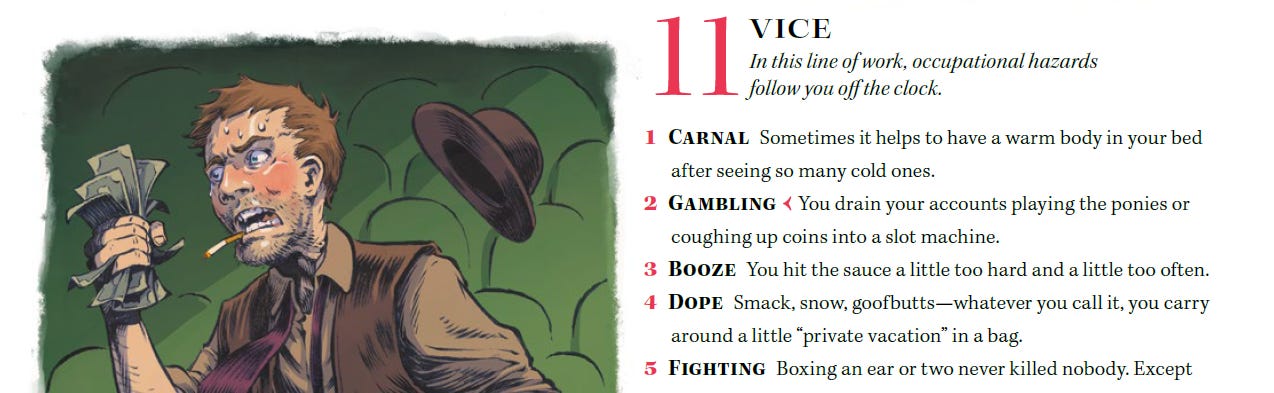
The book spans half a dozen genres, from 80s computer lab robots to gothic starships. Was there a specific genre aesthetic that challenged you the most?
CONOR: The genre I recall being one of the more difficult was “Noir Detective”. The challenge came from the fact that this genre is one of the few chapters most grounded in reality. This and the western genre both have real visual touchpoints that keep them from being pure fantasy. There is the risk of confusing the reader if you verge too far from sacrosanct visual cues for either.

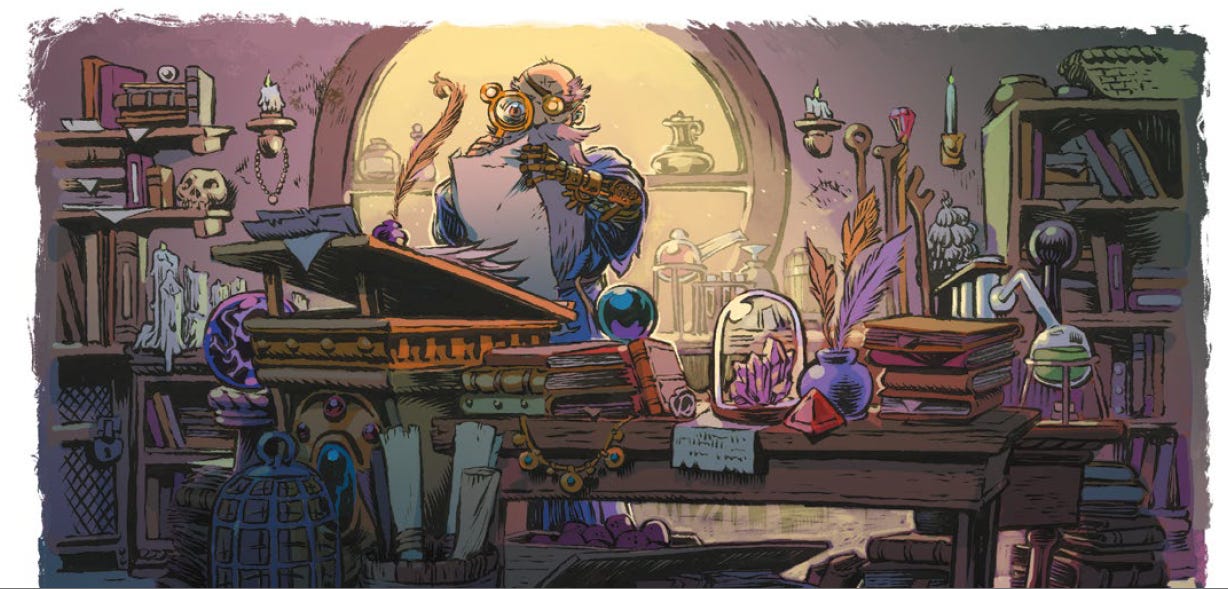
Given that this book spans vastly different genres, how did you approach the challenge of creating a unified look and feek?
CONOR: Two parts to this answer. First is that since all of the illustrations are done by the same hand, you end up with similar sensibilities. Second part is that we established some rules to follow early on. Characters would be isolated, scenes would taper out around the edges, and there would be a sepia drawing per chapter. With those guidelines in mind, we ended up with a unified look.
What is your favorite illustration from the book?
CONOR: I really like how one illustration came out from the Dragon chapter. It was inspired by Japanese horror, and what was created felt unique, at least to me. It’s difficult to do something new when creating dragons, but what I ended up with felt novel and genuinely creepy.
IV.
You suggest using this book with a game like Microscope or Fiasco. Which games have you used this game with?
HENRY: We have rolled for Wizards and used them as player characters in FU (Freeform Universal RPG), my favorite rules-lite TTRPG. Daniel played a very serious old sorcerer and I was his annoying nephew. We used our magic to protect an idyllic forest village centered around a tree full of Keebler-esque elves. Dakota was the gamemaster, and a lot of the elves had Southern accents.
You’ve built a growing library of stand-alone chapters on your website. How often do you plan to release new chapters?
DAKOTA: We don’t have a fixed schedule for stand-alone releases yet. We really enjoy putting these chapters together and we’d love to reach a point where the demand for new chapters is high enough for us to release one every couple of months. With that said, we’ve got Sword coming out soon! Layouts, text, and illustrations (Conor drawing a bunch of wild fantasy swords was a big incentive for tackling this subject matter) are all nearing the final stage and you can expect its release in early summer. Oh and if you’re interested, people can vote on our website for the chapter to follow Sword. Will it be a Cryptid, a Derelict Space Station, or something else?

Have you ever considered creating your own ruleset?
HENRY: I’ve recently been excited about the idea of designing a full-fledged tabletop RPG in which the results of a die roll explicitly guide you toward story beats, personal emotions, motivations, things like that, rather than numbers that tell you whether you succeed or fail at a given task. I think it’d be a huge undertaking; something for a rainy few years. I know there are systems out there along those lines and I’d want to start by hunting down and taking a close look at those. Maybe someone has already made exactly what I want.
What is your most favorite randomly generated thing out of this book?
HENRY: It’s hard to choose! I rolled the Dungeon chapter three times to generate the showcase for the book and they were all winners. The Stone of Krot which appears in the book is a fossilized giant beehive inhabited by a dragon who is best friends with the ghost of the queen bee. I also rolled a creepy white tree in the middle of a wasteland that houses a vampire coven, and a prison fortress on an island that holds a freaky mutated version of the fairy king Oberon. From one of my rolls on the Pirate chapter I got a 6’6” woman from Papua New Guinea who has a quad-barreled flintlock in place of her left hand and a pet komodo dragon who’s super chill.
Now that the “heavy hitters” like wizards, dragons and starships are out of the way, can you give us a hint about one of those “cobwebbed corners” of fiction you’re planning to explore next?
HENRY: Roadside Americana Attraction. Sunday Funnies Comic Strip Protagonist. Conspiracy Theory.
Links:
Get Roll For Your Life here: www.rollforyourlifebook.com
20% discount code: DAVEROLLS26
My YouTube video covering the book.